
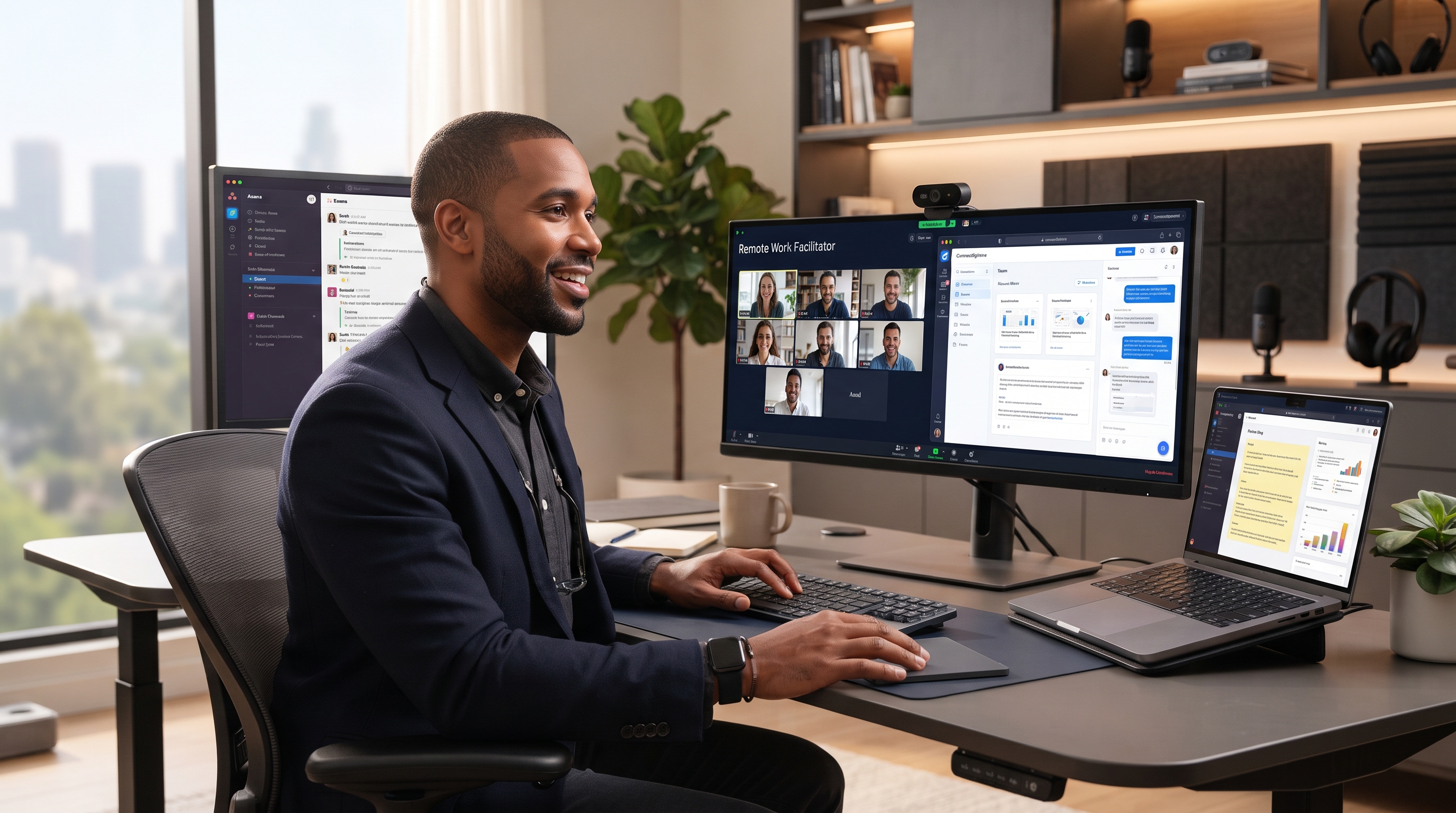
A Remote Work Facilitator is a leader who champions and enables effective collaboration, productivity, and well-being within a geographically dispersed team. They act as the connective tissue, ensuring communication flows, tools are utilised optimally, and the team culture remains strong despite physical distance. A facilitator doesn’t just manage; they guide, support, and optimise the experience for everyone on a distributed team management journey.
More than just a manager, a facilitator acts as the glue that binds a remote team together, fostering communication, collaboration, and productivity, no matter the geographical distances.
Traditionally, management focused on direct oversight and physical presence. However, in a remote setting, these traditional methods are less effective. A Remote Work Facilitator, therefore, requires a different skill set, emphasising empathy, trust-building, and digital fluency.
Key Responsibilities of a Remote Work Facilitator
This involves intentionally creating a sense of belonging and shared purpose, even without the spontaneous “water cooler” moments of an office; establishing clear communication channels, protocols, and best practices for asynchronous and synchronous interactions; utilizing digital tools and strategies to enable effective teamwork, project management, and idea-sharing; and recognising the potential for isolation and burnout in remote settings and proactively addressing these concerns.
Other key responsibilities of a Remote Work Facilitator involves implementing efficient processes and providing the necessary resources for remote employees to perform at their best, ensuring new team members feel welcomed, informed, and equipped to succeed in a remote environment, addressing and resolving disputes or misunderstandings that may arise due to miscommunication or differing work styles in a virtual setting and ensuring team members have the appropriate tools and support for remote work technology.
Essential Skills for Effective Remote Facilitation
To excel in this role, facilitators need to cultivate a blend of soft and hard skills. Soft skills involve understanding and responding to the emotional needs of team members, recognising that each person experiences remote work differently; communication prowess, both in active listening and clear, concise written and verbal communication, is paramount; and creating an environment where trust is foundational, allowing for autonomy and accountability.
Remote work environments are constantly evolving. Facilitators must be agile and able to pivot strategies as needed. Effectively identifying and addressing the unique challenges that arise in distributed teams. Working with a distributed team can sometimes involve delays and require extra effort to ensure everyone is on the same page.
You must learn to inspire and motivate team members without direct physical authority.
The Hard skills, however, include proficiency in collaboration tools (expertise in platforms like Slack, Microsoft Teams, Zoom, Asana, Trello, Google Workspace, etc.). Understanding Agile, Scrum, or Kanban can be beneficial for organising remote workflows; a strong understanding of various technologies and their applications in a remote work context; the ability to interpret basic metrics related to productivity and team engagement; and helping themselves and the team manage multiple tasks and deadlines effectively across different time zones.

Strategies for Effective Remote Team Management
- Establish Clear Communication Protocols.
Specify which tools are used for different types of communication (e.g., Slack for quick chats, email for formal announcements, project management tools for task updates). Clarify response times for different channels and encourage mindful communication. Encourage detailed written communication that doesn’t require immediate responses, respecting different time zones and work schedules. This includes detailed documentation and thorough task descriptions. Schedule regular one-on-one meetings and team syncs, using video conferencing to foster connection.
- Foster a Strong Virtual Culture
Organise online team-building events, virtual coffee breaks, or “water cooler” channels for informal chat; publicly acknowledge contributions and celebrate successes to boost morale and create a positive atmosphere; reinforce company values and ensure they are reflected in remote interactions and decision-making; and pair new hires with experienced team members to help them navigate the remote environment and company culture.
- Optimise Collaboration and Workflow
Utilise tools like shared drives, wikis, or knowledge bases to ensure easy access to information. Use project management tools to assign tasks, track progress, and ensure accountability. Ensure every team member understands their role and how it contributes to the team’s overall objectives. Leverage tools that facilitate collaborative idea generation, mimicking in-person brainstorming sessions.
- Prioritise Employee Well-being
Set clear boundaries for working hours and encourage team members to disconnect outside of those times. Make employees aware of any available mental health support or benefits. Offer flexibility in work schedules where possible, while maintaining necessary overlap for collaboration. Create a safe space for employees to voice concerns or challenges they are facing.
- Leverage Technology Effectively
Ensure the team has access to reliable and user-friendly collaboration and communication software. Offer training on how to use the essential tools and platforms to their full potential. Implement strong cybersecurity practices to protect sensitive data when working remotely.
Final Thoughts
As remote and hybrid work models become the norm, the role of the Remote Work Facilitator will only grow in importance. They are not just managers of tasks, but architects of connection, culture, and sustainable productivity. By embracing the skills and strategies outlined above, organisations can empower their facilitators to build thriving, high-performing distributed teams, ready to tackle any challenge the future may hold.
In essence, a successful Remote Work Facilitator acts as a compass, guiding their team through the complexities of virtual collaboration, ensuring everyone stays on track, connected, and motivated, regardless of where they are. They are the linchpin for a productive, engaged, and cohesive remote workforce. Join us for more freelance tips.