
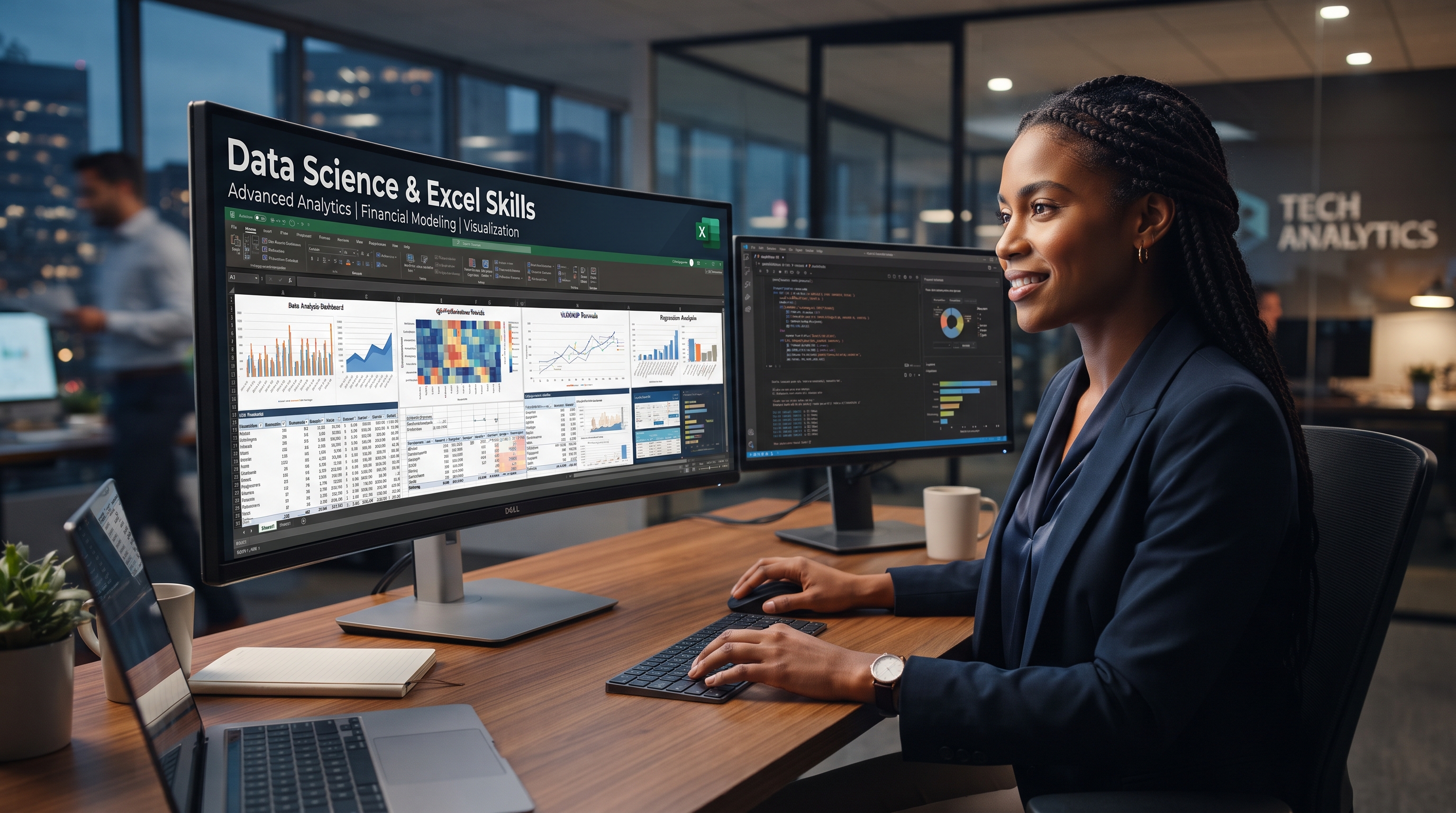
Before you can package your skills, you need to clearly understand what you offer. Data Science and Advanced Excel are broad fields, so pinpoint your specific areas of strength and the problems you can solve like Programming Languages Python (libraries like Pandas, NumPy, Scikit-learn, Matplotlib, Seaborn), R, SQL, Machine Learning(Regression, Classification, Clustering, Time Series Analysis, Deep Learning), Creating insightful charts and dashboards (e.g., using Matplotlib, Seaborn, Plotly, Tableau, Power BI);
Data Visualization in Excel (Charts, conditional formatting, Sparklines), Data cleaning, shaping, and transformation, creating data models, DAX formulas for complex analysis, and many other skills you could have. The idea is not just about listing the skills but about how you’ve used them to achieve results. Quantify your achievements whenever possible (e.g., “Automated reporting processes, saving 5 hours per week” or “Developed a predictive model that increased sales by 15%”).
Your resume and portfolio are your primary tools for showcasing your skills, so being intentional about crafting them is vital. For remote roles, you need to clearly articulate your ability to work independently and deliver impactful results. Tailor it to highlight your remote work aptitude and core skills. For instance: “Highly analytical and self-driven Data Scientist with 5+ years of experience in Python, machine learning, and advanced Excel data analysis. Seeking a challenging remote role to leverage expertise in predictive modeling and data visualization to drive business insights and optimize operational efficiency.”
Using quantifiable achievements is crucial. Use numbers to demonstrate your impact. Instead of “I worked with large datasets,” say “I analyzed over 1TB of customer data to identify key purchasing patterns, leading to a 10% increase in targeted marketing campaign ROI.” Include terms like “remote collaboration,” “distributed teams,” “asynchronous communication,” “virtual project management,” and specific remote tools you’ve used (e.g., Slack, Zoom, Asana, Trello, Microsoft Teams). Clearly delineate your Data Science and Advanced Excel skills. Consider using subheadings for clarity.
Building a Powerful Portfolio
A personal website or a well-maintained GitHub profile is essential for showcasing your work. Host your code for data science projects. Ensure your repositories are clean, well-documented, and include README files that clearly explain the project, methodology, and results. Participate in data science competitions to showcase your analytical skills. And if you don’t have professional projects to share, create personal ones! Analyse public datasets in your target industry.
Create short case studies of how you’ve used advanced Excel for specific business problems (e.g., budgeting, financial modelling, process automation). You can present these as interactive Excel files (if allowed by the platform), PDFs, or blog posts. Showcase screenshots or interactive versions of dashboards you’ve built. If you have VBA macros, provide explanations or sample use cases.

Showcasing the Synergy of Data Science and Excel for Remote Roles
The real magic happens when you demonstrate how your Data Science and Advanced Excel skills complement each other to solve business problems. Remote roles often require individuals who can handle diverse tasks and bridge gaps between complex technical solutions and user-friendly business applications.
Advanced Excel allows non-technical stakeholders to easily interact with, understand, and leverage complex data insights generated by data science models. This is invaluable for remote teams where direct, in-person explanations can be challenging. You can build sophisticated models in Python and then create user-friendly interfaces or reports in Excel that executives or business analysts can easily use for decision-making. Automating data collection, cleaning, and reporting using tools like Power Query and VBA, combined with predictive insights from Python, streamlines workflows. You can handle everything from deep statistical analysis and model development to creating ad hoc reports and complex financial models. This dual skillset allows you to tackle a wider range of business problems effectively.
To articulate this synergy, you can describe situations where you used Python to build a model and then Excel to make the output digestible and actionable for a non-technical audience, and explain how your Excel skills support your data science work, or vice-versa.
When applying for a role, read the job description carefully. If it mentions “reporting,” “analytics,” or “business intelligence,” emphasize your Excel skills. If it focuses on “modeling,” “AI,” or “predictive analytics,” lead with your data science strengths. Ideally, you’ll show how you can do both.
Networking and Job Searching for Remote Opportunities
Effective networking and targeted job searching are critical for landing remote positions. Optimise your profile and ensure it reflects your remote readiness and your combined DS/Excel skills. Use keywords. Connect with recruiters specialising in remote tech roles, hiring managers at companies hiring remotely, and professionals in fields that leverage data science and advanced Excel. Comment on relevant posts, share your own insights, and participate in industry groups.
Informational Interviews: Reach out to people in roles you aspire to and ask about their remote work experience and how they leverage data. Join Slack communities, Discord servers, or forums related to Data Science, Excel, remote work, or your target industry. Be helpful and participate actively. This is how you get noticed. Attend online conferences, workshops, and webinars. These are great places to learn and connect with like-minded professionals.
For targeted remote job searching, utilise platforms dedicated to remote work (e.g., We Work Remotely, Remote.co, FlexJobs, AngelList, LinkedIn Remote Jobs). Many companies now have specific sections for remote openings on their own websites; look out for them. Use precise search terms: “Remote Data Scientist,” “Remote Data Analyst,” “Remote Business Intelligence Developer,” “Remote Excel Expert,” “Data Science (Remote),” “Analytics (Remote),” “Excel Automation Specialist (Remote).” Understand Remote Roles: Be aware of the different types of remote arrangements (fully remote, hybrid, remote-first) and what kind of culture you’re looking for.
Interviewing for Remote Data Science and Excel Roles
The interview process for remote roles often includes stages designed to assess your technical skills, problem-solving abilities, communication, and suitability for remote work. Prepare your environment and ensure you have a quiet, professional space for video interviews with good lighting and a stable internet connection. Practice articulating your thoughts clearly and concisely, both verbally and in writing. Remote work relies heavily on strong communication. Be ready to discuss your experience with common remote collaboration tools (Slack, Teams, Zoom, Asana, Jira, etc.) Be prepared to share examples of how you manage your workload, prioritise tasks, and stay motivated when working independently.
Technical interview strategies, however, may include live coding challenges, take-home assignments, or screen-sharing sessions where you’ll write Python or R code. You might be given a dataset and asked to perform analysis, build a report, or write SQL queries. Case studies and take-home Assignments are commonly used for assessing your end-to-end problem-solving skills, including data wrangling, analysis, modelling, and reporting. They’re a prime opportunity to showcase your combined DS and Excel capabilities. Be prepared to answer questions about your experience working in teams, handling challenges, learning new skills, and your approach to remote collaboration.
Conclusion
By meticulously packaging your Data Science and Advanced Excel skills, focusing on tangible results, and presenting a clear vision of how you can contribute to remote teams, you significantly enhance your appeal to employers. A well-defined portfolio, a targeted resume, and proactive networking will set you apart in the competitive landscape of remote work. Your ability to blend sophisticated analytical techniques with practical, user-friendly data tools makes you an invaluable asset to any organisation seeking to make data-driven decisions, especially in a distributed workforce. Learn more freelance skills with us.