
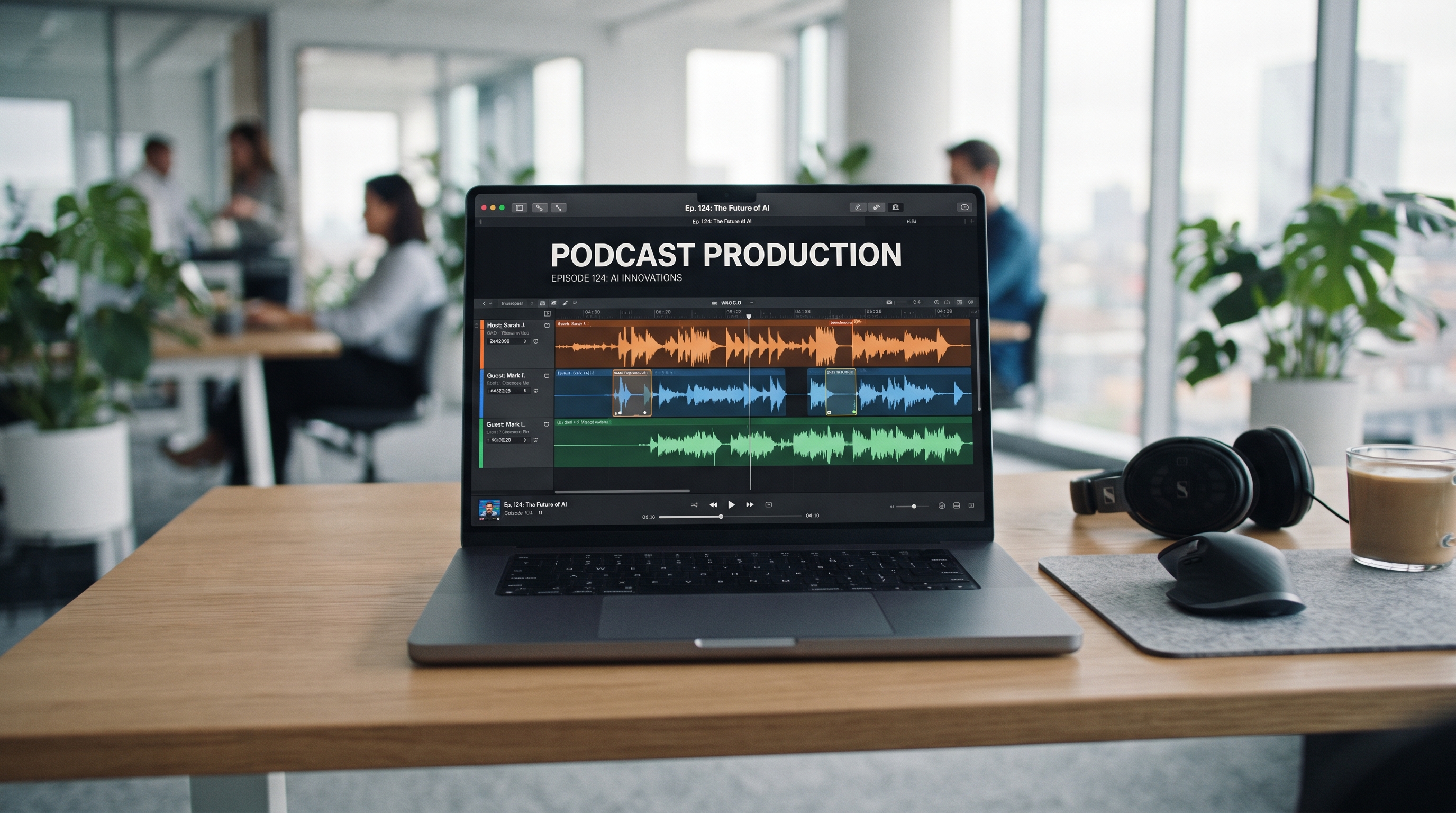
Podcasting has exploded in popularity, transforming how we consume content and how creators connect with audiences. Behind every polished episode is often a significant amount of post-production work. If you have a knack for audio editing and a desire for a flexible side hustle, diving into podcast post-production could be your ticket.
Understanding the Scope of Podcast Post-Production
Podcast post-production encompasses a range of services that elevate raw audio recordings into broadcast-ready episodes. Key areas include editing and removing mistakes, long pauses, filler words like “um,” “uh”, and unwanted sections, mixing and balancing the levels of different audio sources (hosts, guests, music, ads), applying equalization (EQ) to improve clarity, and compressing audio for a consistent volume and mastering the final polish that ensures the podcast meets loudness standards (like LUFS) for various platforms and enhances overall sound quality. It also involves noise reduction, eliminating or minimizing unwanted sounds such as background hum, room echo, plosives (harsh “p” and “b” sounds), and hiss, seamlessly integrating theme music, sponsor messages, and outros.
Setting Up Your Service and Business
Define Your Services and Niche. What exactly will you offer? Full podcast production and specific services such as focusing on background noise removal, audio snippet mastering, or podcast mixing. Consider specialising in a genre (e.g., true crime, business, storytelling) where you have an interest or understanding. This can help you stand out.
Pricing your services can be tricky at first. There would be a lineup of pricing models to try out– Charging a fixed fee for editing and mastering a typical episode length or charging per hour; however, it would help to research what other freelancers in this space are charging. Don’t undervalue yourself, but be competitive as you build your portfolio.
To build your portfolio, you would need examples to showcase your skills. Approach aspiring podcasters or friends with new podcasts and offer your services for free or at a steep discount in exchange for a testimonial and the right to use the work in your portfolio, or take a rough audio recording (even your own) and meticulously edit, mix, and master it to showcase your best work, and create before-and-after clips.
Of course, you would have to create your online presence; a simple website can showcase your services, portfolio, testimonials, and contact information, but you would still need a professional profile. Use platforms like LinkedIn, Upwork, or Fiverr; tailor your profile to highlight your podcast post-production skills. You could also share tips on podcast audio, showcase your before-and-after work, and engage with podcasting communities.
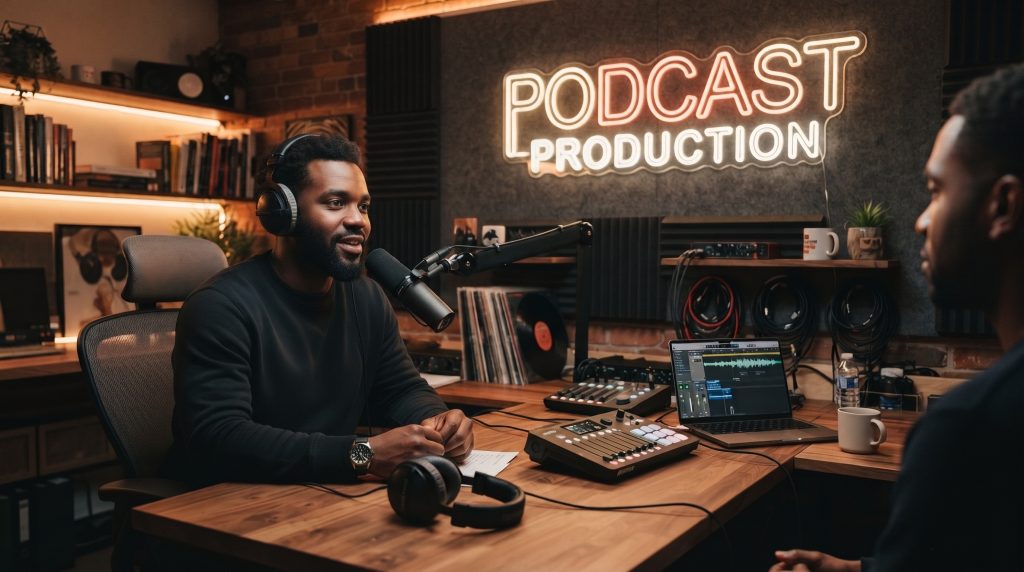
The Workflow: A Step-by-Step Process
1. Onboarding
Understand your client’s specific needs, desired sound, genre, and any music or ad insertions. Make arrangements for how you’ll receive their raw audio files (e.g., Google Drive, Dropbox, WeTransfer).
2. Pre-production/Preparation
Organise files and create a dedicated folder for the client and episode. Listen to the entire raw recording to identify major issues and estimate time.
3. Editing
Remove mistakes, cut out errors, filler words, long pauses, and unwanted noise. Make sure the flow is logical and engaging. Place intro/outro music, ad spots, and sound effects.
4. Mixing & Audio Enhancement
Apply background noise removal and de-hissing to clean up audio, balance the volume between speakers, and apply compression to create consistency. Shape the vocal frequencies for clarity and warmth. Focus on creating clean, punchy audio snippets for social media if the client requires them.
5. Mastering
Set the overall volume to industry standards (typically –16 LUFS for stereo or -19 LUFS for mono podcasts) and add a light touch of compression or limiting to ensure consistent loudness across the episode.
6. Quality Assurance (QA)
Do a final listen-through on different systems (headphones, speakers) to catch any remaining issues. Export the final audio file (usually MP3 or WAV) according to client specifications.
7. Delivery & Feedback
Send the final file to the client for their approval. Be prepared for minor revisions based on client feedback (build this into your pricing/contract), and then you can be ready to send your invoice and collect payment.
Common Challenges and How to Overcome Them
- Client Expectations: Some clients may not understand the technicalities. Educate them about what’s possible and set realistic expectations early on.
- Bad Source Audio: Dealing with echo, background noise, or low-quality recordings can be challenging. While background noise removal tools are powerful, they have limits. Be upfront if the source audio is very problematic and discuss realistic outcomes.
- Revision Requests: Sometimes clients ask for extensive or unreasonable revisions. Have a clear revision policy outlined in your service agreement.
- Burnout: As a side hustle, it’s important to manage your time and avoid overcommitting. Stick to your set working hours.
Final Thoughts
Launching a podcast post-production side hustle is more than just technical skills; it’s about reliability, professionalism, and delivering value. By focusing on quality, building a strong portfolio, and communicating effectively with clients, you can create a sustainable and rewarding venture that taps into the ever-growing world of podcasting. Join our community for more side hustle updates.