
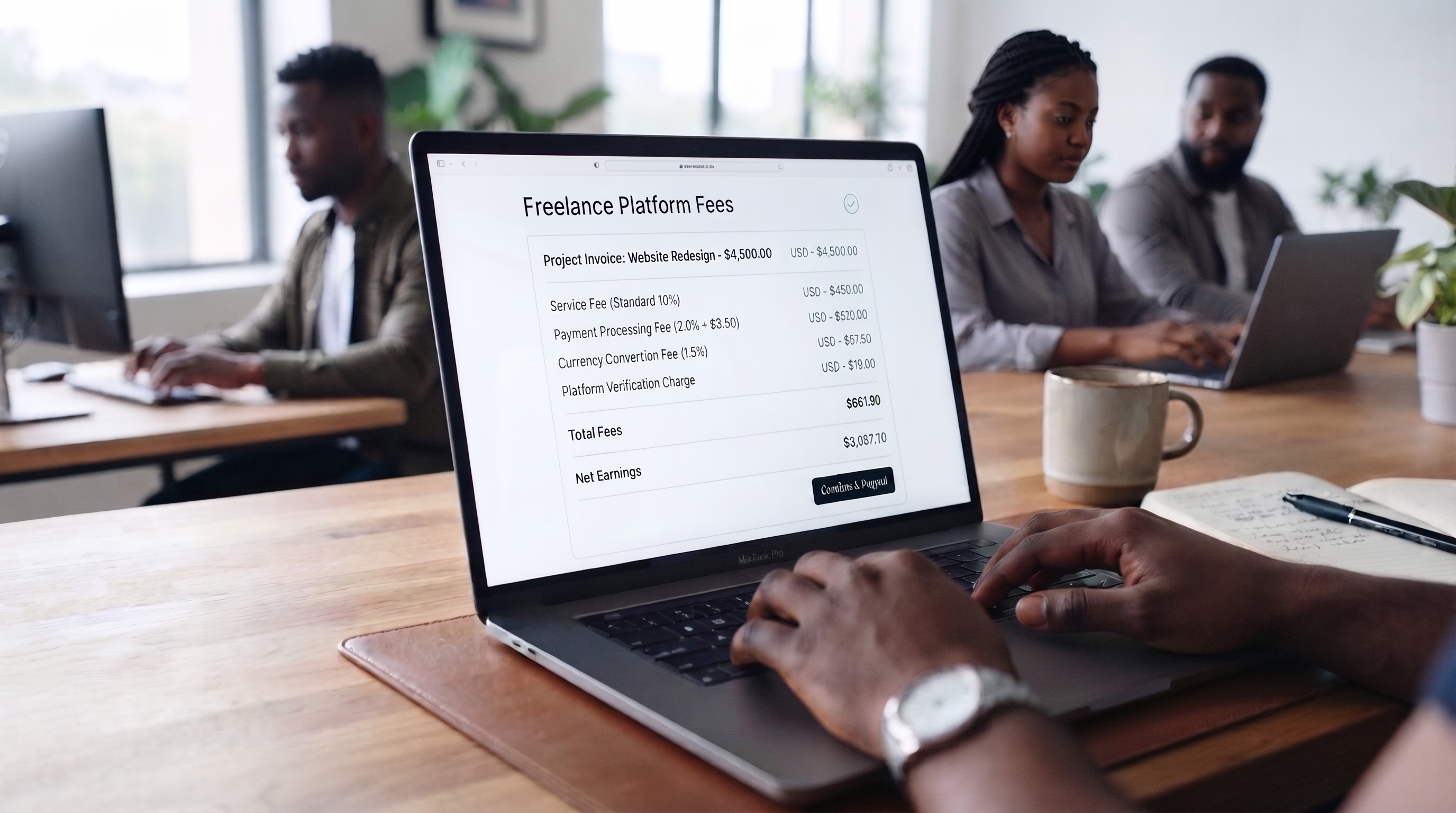
For many African freelancers, the dream of earning hard foreign currencies like USD, EUR, or GBP is the primary motivator for joining global platforms. On the surface, these marketplaces offer a simple escape from local economic volatility. However, as the digital economy in Africa matures with homegrown fintech platforms, a harsh reality has set in: the gross amount you bill a client is rarely what ends up in your local bank account.
The cumulative effect of platform commissions, payment processing fees, and the spreads on exchange rates can swallow up to 30% of a project’s value before the money even touches African soil. For a professional in several parts of Africa, where the cost of data and power is already an infrastructure tax, these fees represent a significant barrier to scaling. To build a profitable business, you must move beyond looking at your hourly rate and start analysing your net-after-fees income.
The Triple-Layer Fee Structure
Most freelancers focus on the headline commission rate, but most freelance platform fees happen in three different layers. Understanding these layers is the first step in starting your freelance journey with a realistic financial plan.
- The Service Fee: Most platforms take a flat or sliding percentage of your earnings, typically ranging from 5% to 20%. While this covers the cost of matching you with a client, it is a heavy burden for high-volume, low-margin tasks.
- Payment Processing & Withdrawal Fees: Once the platform takes its cut, the payment gateway takes another. These can be flat fees per withdrawal or a percentage of the total.
- The Hidden Exchange Rate: This is often the most overlooked cost. Platforms and banks rarely give you the mid-market exchange rate you see on Google. Instead, they offer a lower rate and pocket the difference.
Why African Freelancers Pay More
It is a frustrating reality that the cost of being a freelancer is often higher for those in developing economies. Many global payment processors consider certain African regions “high risk,” leading to higher transaction fees. Furthermore, because many African countries lack direct integration with major global platforms, freelancers often have to use a chain of services to get their money home.
At each step, a small fee is deducted. This is one of the common hurdles for African creatives that their peers in the Global North rarely have to calculate. These “frictional costs” make it harder to remain competitive while maintaining a livable profit margin. This struggle is why many are looking for more efficient ways of Using Stablecoins to Get Paid Without PayPal, which can significantly reduce intermediary costs.
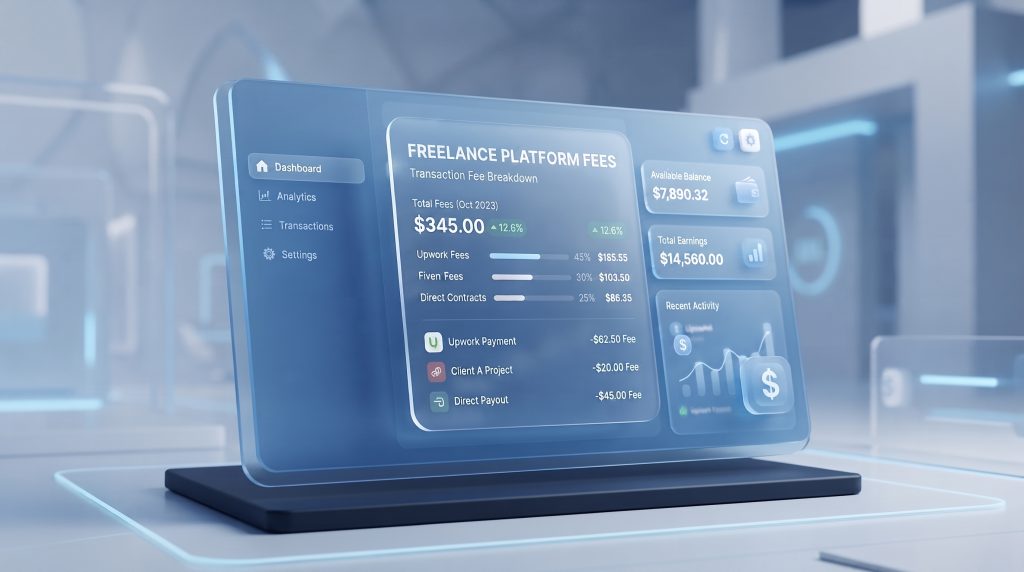
The Impact on Pricing Strategy
If you are not accounting for freelance platform fees in your initial quotes, you are essentially giving your clients a 20–30% discount at your own expense. In 2026, savvy freelancers are moving away from flat rates and toward value-based pricing that accounts for the cost of the platform.
For example, if you want to take home $500 for a project, and you know the platform and withdrawal chain will cost you 25% in total, your gross quote should be closer to $665. Many freelancers fear that higher quotes will drive away clients, but the alternative is a race to the bottom where you are working more hours for less money. This financial pressure is why the conversation around freelancer taxes in Africa is so complex; when platforms take such a large cut, adding government taxes on top can make digital work feel unsustainable.
Strategies to Protect Your Margins with Freelance Platform Fees
While you cannot eliminate freelance platform fees, you can optimise your workflow to minimise their impact. Here are three strategies being used by top African freelancers in 2026:
- Consolidate Withdrawals: Instead of withdrawing money every time a small milestone is paid, wait until you have a larger balance. Withdrawing $1,000 once is much cheaper than withdrawing $100 ten times.
- Negotiate Off-Platform Transitions: Many platforms allow you to move a client relationship off-platform after a certain period. Once trust is established, moving to direct invoicing via top fintech platforms for global payments can save both you and the client thousands in service fees.
- Direct-to-Client Models: Reducing reliance on third-party marketplaces by building a personal brand is becoming a popular way to keep 100% of the project fee.
The Rise of Local Platforms
As global giants become more expensive, we are seeing the rise of local payment platforms specifically designed for African talent. These platforms often have fee structures that are better aligned with the local economy and offer direct integration with mobile money services.
By diversifying where you find work, you reduce your dependency on any single platform’s pricing lists. Working on a local or regional platform might offer lower USD rates, but the lower fees and ease of withdrawal often result in a higher net profit. This is a vital productivity hack for those looking to build a sustainable business: it’s not about how much you make, it’s about how much you keep.
Conclusion
Freelance platform fees are a necessary evil in the current gig economy, and they provide the infrastructure that allows us to work with the world. However, they should not be a black box that you ignore. By meticulously tracking your hidden costs and adjusting your pricing accordingly, you take control of your financial future as an African freelancer.
The African freelance market is the most resilient in the world. We have learned to overcome multiple grassroots issues like unstable internet, power supply, and power shortages; now, we must learn to master the economics of the platforms we inhabit. Don’t let your earnings be eaten by invisible commissions. Treat your freelance work like the business it is, account for every cent, and ensure that the value you create stays where it belongs- right in your pocket.